Watching My Two-Year-Old Become His Big Brother
- Emily Moheb, LPC

- May 25
- 5 min read
My youngest son turns turns two next week.
Lately, I've noticed something happening almost daily.
A phrase he says.
A facial expression.
A sound effect.
The way he runs across the room.
The way he reacts when he's excited.
The way he protests when he's frustrated.
The way he laughs after doing something he knows he probably shouldn't have done.
More and more, I find myself smiling because I know exactly where it came from.
His big brother, who is almost five.
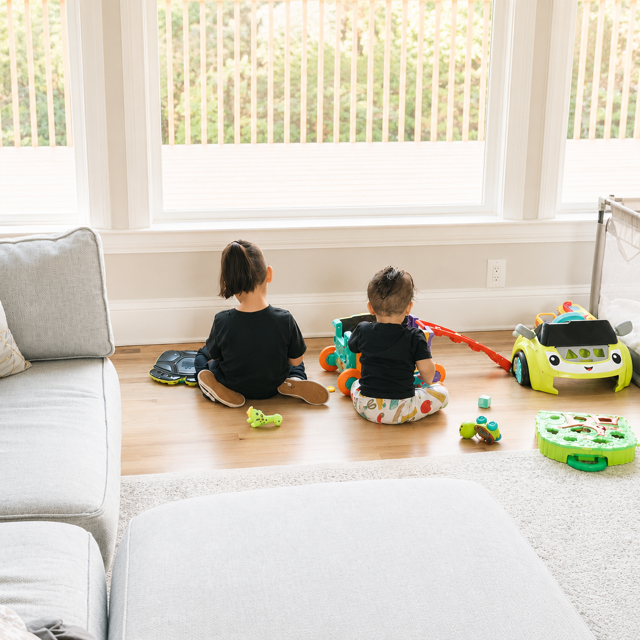
Sometimes it feels like I'm watching a tiny mirror walk around my house.
And it's a beautiful reminder that children aren't only learning from their parents.
They're learning from the people they admire most.
Younger Siblings Are Always Watching
As parents, we spend so much time thinking about how our words, actions, and responses shape our children that we sometimes forget another powerful influence exists inside our homes.
Siblings.
Especially older siblings.
To a toddler, an older sibling isn't just a brother or sister.
They're a roadmap.
They're proof of how people act in this family.
They're a source of entertainment, belonging, comfort, curiosity, and inspiration.
Long before younger siblings can fully understand the world around them, they're studying the people in it.
And nobody gets studied more closely than the big brother or big sister they spend every day watching.
When my youngest son sees his older brother do something, his little brain isn't thinking, "I'm going to imitate that behavior."
His brain is simply doing what children's brains are designed to do:
Observe.
Absorb.
Practice.
Repeat.
This process is one of the primary ways children learn.
Psychologists call it observational learning. Parents usually call it copying.
The Good News About Copying
Most of the time, sibling imitation is actually wonderful.
Children don't just copy behaviors.
They copy confidence.
They copy curiosity.
They copy courage.
They copy humor.
They copy kindness.
They copy routines.
They copy the way older siblings approach challenges, interact with others, and solve problems.
I've watched my youngest son attempt things months before he otherwise would have because he saw his brother doing them first.
I've watched him mimic words, games, and gestures that clearly made him feel more connected to his big brother.
That's one of the hidden gifts of siblings.
Children don't only grow alongside one another.
They help grow one another.
The Part That Makes Parents Nervous
Of course, younger siblings don't only copy the good stuff.
They copy everything.
The whining.
The dramatic sighs.
The attitude.
The questionable vocabulary.
The behaviors we'd prefer remained exclusive to one child.
Many parents have experienced that moment when their younger child does something unexpected and you immediately think:
"Where did they learn that?"
And then you look across the room and realize exactly where they learned it.
This can feel frustrating, especially when you're already trying to guide one child through a difficult behavior.
Now it suddenly feels like you're managing two.
But here's the important thing to remember:
The copying itself is not the problem.
The copying is evidence of connection.
The behavior is what needs coaching.
What Parents Often Get Wrong
One of the easiest traps to fall into is labeling one child as "the bad influence."
The problem is that children hear those labels.
And over time, they start to believe them.
Instead of focusing on who caused the behavior, focus on the behavior itself.
Rather than:
"Stop teaching your brother that."
Try:
"Let's practice a different way to handle that."
Rather than:
"Your brother keeps copying everything you do.
Try:
"Your brother looks up to you. He's learning from what he sees."
Children are not trying to create problems for us.
They're trying to understand how relationships work.
How emotions work.
How families work.
And often, they're doing it through each other.
The Responsibility Older Siblings Don't Realize They Carry
One of the things I've been thinking about lately as my youngest approaches his second birthday is how my almost 5-year-old son understands the influence he has.
Most older siblings don't.
They think they're simply playing.
Talking.
Being themselves.
Living their lives.
Meanwhile, someone is quietly watching every move.
Learning.
Studying.
Adapting.
Growing.
It's both beautiful and humbling.
Because whether we realize it or not, our children are helping shape one another's childhoods.
The memories.
The habits.
The confidence.
The emotional skills.
The stories they'll eventually tell about growing up.
All of it is being built in these ordinary moments that often feel insignificant while we're living them.
How Parents Can Encourage Positive Modeling
If you have multiple children, here are a few simple ways to support healthy sibling influence:
1) Notice and praise positive behaviors.
Children repeat what receives attention.
When you see kindness, patience, helpfulness, or cooperation, name it.
2) Coach privately whenever possible.
If an older child needs correction, try to avoid turning it into a public sibling lesson.
3) Avoid labeling one child as the good influence and another as the bad influence.
Every child deserves room to grow.
4) Give each child opportunities to develop their own identity.
Copying is normal. Individuality matters too.
5) Remember that someone is always watching.
Not because children are trying to be difficult.
Because they're trying to learn.
As Mine Turns Two
As my baby gets ready to celebrate his second birthday, I find myself noticing all the ways he's becoming more himself.
His own personality.
His own preferences.
His own little quirks.
But I also notice traces of his brother everywhere.
In his words.
His laughter.
His confidence.
His play.
His determination.
And it reminds me that childhood is never built by parents alone.
Siblings shape one another in ways that often go unnoticed.
They become teachers without realizing it.
Role models without asking for the job.
And sometimes, if we're lucky, best friends for life.
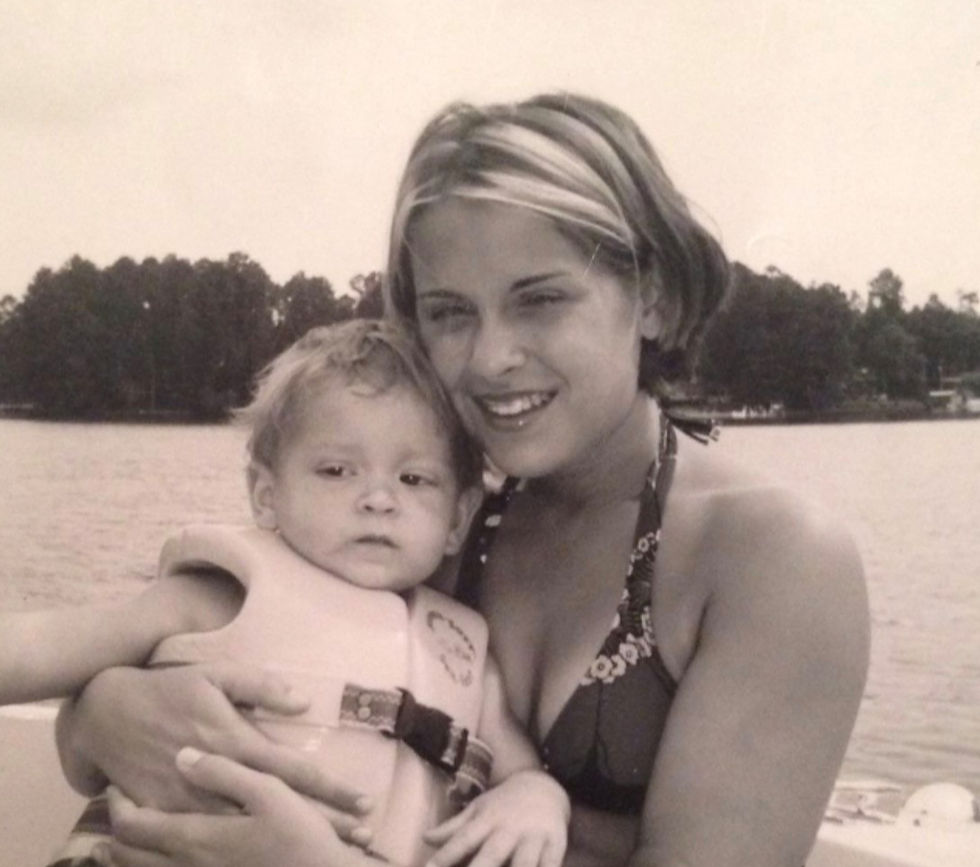
As a therapist and the oldest of three children, I understand the science behind observational learning and child development. I know what the research says about how children learn by watching the people around them. But I also understand it from a deeply personal place. I know what it's like to be the older sibling without realizing someone is watching, learning, and taking cues from the example you're setting.
As a mom, I now have the privilege of watching that same story unfold every day in my own living room.
And as my baby turns two, I'm grateful for the reminder that children are always learning—not only from us, but from the people they love most.
Sometimes, the most important lessons come from a big brother who has no idea he's teaching.

Comments